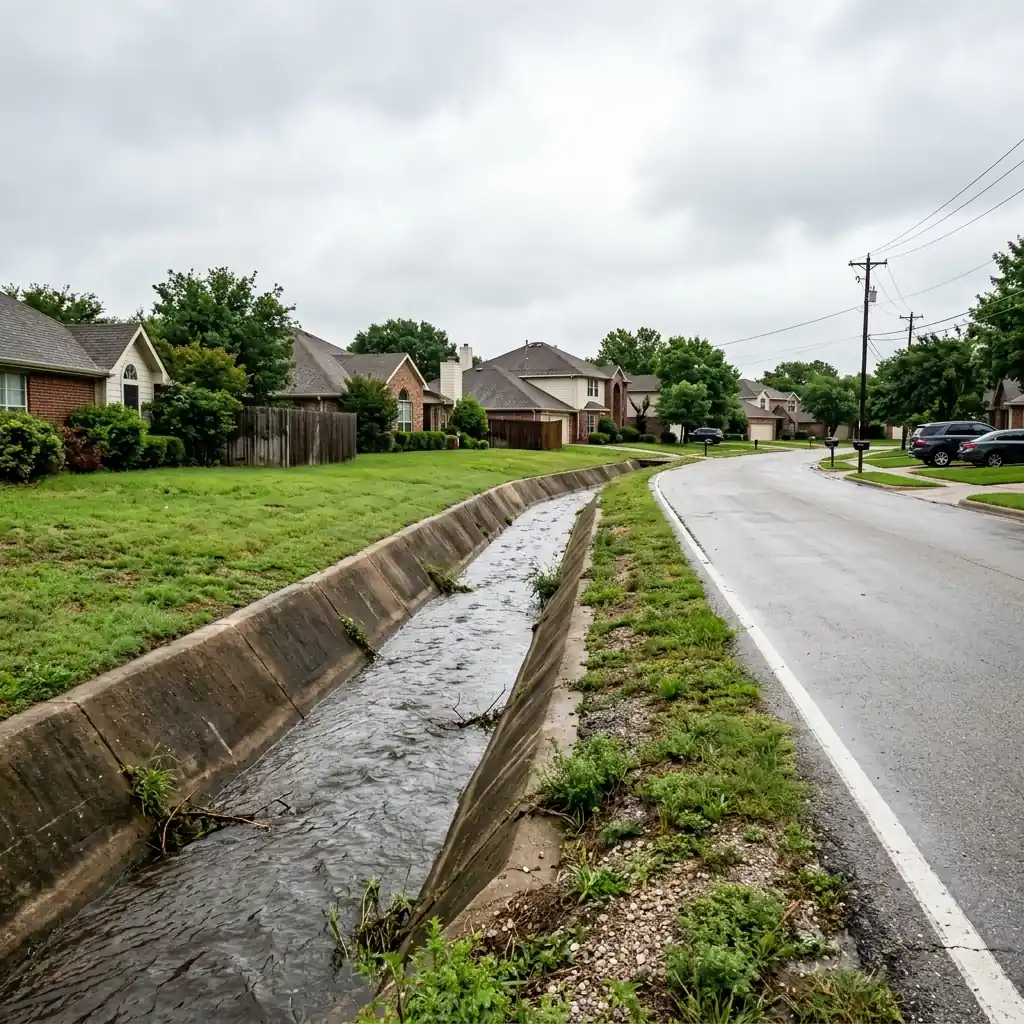
Marine Creek: Risk Near the Historic Stockyards Area
Marine Creek runs through the northwest part of Haltom City near the Historic Stockyards area. Homes near this creek face elevated flood risk during severe weather, separate from the Big Fossil Creek exposure on the other side of the city.
Because this is a more localized waterway than Big Fossil Creek, the risk here tends to be tied more directly to intense, short-duration storms than to broader regional rain events.
Sycamore Creek: South Side Flood Exposure
Properties flanking Sycamore Creek on the South Side face their own inundation risk during heavy rain. This is a smaller watershed than Big Fossil Creek, but it still drives real flood exposure for the homes closest to it.
Homeowners in this part of Haltom City sometimes assume their flood risk is lower simply because they're farther from Big Fossil Creek. Sycamore Creek's own flood pattern means that assumption doesn't always hold.
Village Creek: East Side Flood Exposure
Homes adjacent to Village Creek on the east side of Haltom City face a similar localized flood risk. Like Marine Creek and Sycamore Creek, this risk is specific to the immediate area around the creek, not a citywide pattern.
Fossil Springs and Big Fossil Creek: A Direct Name-Tie-In
Of all of Haltom City's named creeks, Big Fossil Creek has the clearest documented flood history, dating back to a major 1962 event. The Fossil Springs neighborhood takes its name directly from this creek, and it's worth checking your specific flood zone designation if you live in or near that area.
What Homeowners Near Any of These Creeks Should Do Before Storm Season
Check your FEMA flood zone designation at msc.fema.gov regardless of which creek is closest to your home. If a storm event has already caused water intrusion near any of these waterways, call a professional before starting cleanup, since creek floodwater is typically Category 2 or 3 contaminated water that needs proper extraction with truck-mounted extractors and dehumidifiers before it migrates into drywall, framing, and flooring, not a DIY shop-vac approach.
Four separate named creeks running through one city is more than most homeowners realize until they actually check the map. Knowing which one is closest to your specific property is the first step in understanding your real flood risk, rather than assuming it only applies to homes directly on Big Fossil Creek.
How to Check Your Own Address
Flood exposure changes street by street, and a home two blocks from a creek can sit higher than one half a mile away. FEMA publishes its flood maps by address, and Tarrant County keeps drainage information for the creeks that run through the city. Knowing which zone you are in tells you whether standard homeowners coverage is likely to be enough, since flood damage from rising water is normally excluded from it and needs separate cover.
We respond across all Haltom City neighborhoods, 24/7. Whether you're near Marine Creek, Sycamore Creek, Village Creek, or Big Fossil Creek, our flood damage restoration service covers the full process from extraction through structural drying. Call (817) 973-0943. A live dispatcher answers every call.