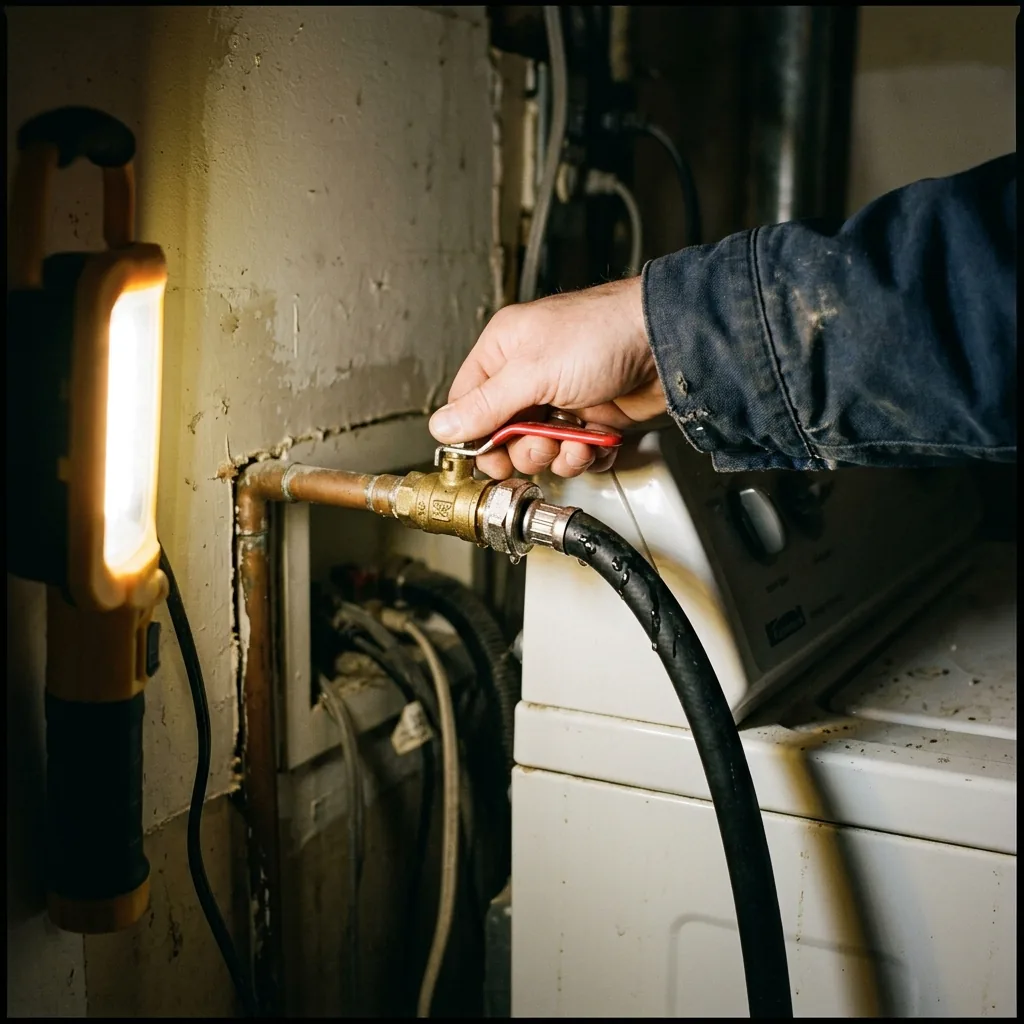
Step 1: Stop the Water Source if Safe to Do So
If you can safely shut off the water main or stop the source, do it first. For a burst pipe, that usually means locating the main shutoff valve near your water meter. If the source involves any electrical risk or standing water near outlets, skip this step and wait for a professional.
It's worth knowing where your main shutoff valve is before an emergency happens, not during one. Take a minute now to locate it, since fumbling to find it while water is actively spreading costs you exactly the time you don't have.
Step 2: Document Everything Before Moving Anything
Take photos and video of the damage before you move furniture, pull up carpet, or start any cleanup. This documentation matters for your insurance claim regardless of whether the damage turns out to be covered.
Wide shots that show the full extent of the damage, plus close-ups of the source itself, give your adjuster the clearest picture. Avoid moving damaged belongings until you've photographed them in place.
Step 3: Call a Restoration Crew, Not a DIY Fix
A shop vac and some fans can remove visible water, but they don't address moisture that has already migrated into walls, subflooring, or framing. Professional water extraction and structural drying equipment reaches what household tools can't.
Step 4: Understand the Water Category You're Dealing With
The IICRC splits water damage into three categories. Category 1 is clean water from a supply line or appliance. Category 2 is gray water, like from a washing machine or toilet overflow without solid waste. Category 3 is black water, including sewage and floodwater, and requires full protective equipment to handle safely.
Knowing which category applies changes what's safe to do yourself. Category 1 water poses little risk to touch, while Category 2 and 3 water can carry bacteria that make DIY handling a genuine health risk, not just an inconvenience.
What Happens If You Wait Longer Than 24 Hours
Mold can begin developing within 24 to 48 hours of water sitting untreated. Waiting longer than that window significantly raises the odds that mold remediation becomes a second job on top of the original water damage repair, and raises the total cost of the restoration.
The cost difference between calling within the first few hours and waiting a few days is often the difference between a contained drying job and a job that also requires mold remediation and possibly drywall or flooring replacement.
Three Things Not to Do in the First Day
Do not move wet rugs onto hardwood, because the dye and the trapped moisture will both transfer into the boards. Do not run a household box fan across water that came from a sewer line or a storm drain, since that pushes contaminated aerosols through the rest of the house. And do not throw damaged items out before they are photographed and listed, because an adjuster cannot reimburse what nobody can see.
We respond across all Haltom City neighborhoods, 24/7. If you're in the first hours after water damage right now, call (817) 973-0943. A live dispatcher answers every call and gets a certified crew moving toward your property fast.